Rain on the window, a cool breeze in the evening, and a corner full of green leaves. For most plant lovers, the rainy months feel like the best time of the year.
Yet inside the house, this is often when leaves turn yellow, soil starts to smell sour, and tiny flies appear out of nowhere.
Most of this damage does not come from the rain. It comes from small habits that worked well in summer and quietly stop working once the air turns damp.
At Plant1, we hear about it from our Smart Growers every rainy season, and we deal with it on our own desks too.
Good monsoon indoor plant care comes down to three adjustments, and each one starts with knowing what the weather is doing to your plants.
What the Monsoon Changes Inside Your Home
The biggest change is how slowly things dry. In summer, the top layer of soil can dry out in a day. During the rains, the same pot can stay wet for four or five days because the air around it is already full of moisture.
Light drops as well. Cloudy skies mean fewer hours of bright, indirect light near the window. With less light, plants grow slower, and a slow-growing plant drinks less water. So even though the air feels heavy and sticky, your plants need less from the watering can, not more.
Our team sums up the monsoon problem in one simple line:
Damp air + still room + wet soil = a perfect home for fungus
There is a doha by Kabir that fits this season well:
"अति का भला न बरसना, अति की भली न धूप।" Too much rain is not good, and neither is too much sun.
That is the heart of indoor plant care in the rainy season. Moisture is not the enemy. Too much of it, sitting in one place for too long, is what causes trouble.
Humidity: A Gift for Some Plants, Trouble for Others
Humidity for indoor plants works differently from plant to plant. Many tropical houseplants come from forests where the air is always damp, so the monsoon feels like home to them. Desert plants are built to store water and dislike staying moist for long.
Here is how common Indian home plants usually react to the rainy season:
|
Plant |
How it reacts to monsoon humidity |
What to do |
|
Ferns (Boston fern) |
Loves it, grows fuller |
Stop misting, let nature do the work |
|
Calathea |
Loves it, leaf edges stop browning |
Keep away from cold drafts |
|
Money plant (pothos) |
Comfortable |
Water less, give it bright indirect light |
|
Peace lily |
Comfortable |
Watch for drooping from soggy roots, not thirst |
|
Snake plant |
Tolerates it |
Water very rarely, avoid wet soil |
|
Succulents and cacti |
Struggles, gets soft and mushy |
Move to the brightest spot, keep soil dry |
In our experience, the first warning signs of too much moisture show up on the soil before the leaves.
Look for white fuzzy mould on the surface, a sour or musty smell from the pot, leaves yellowing from the bottom, and stems going soft near the base.
A basic digital hygrometer near your plant shelf helps you track humidity for indoor plants. When it reads very high for several days, that is your cue to focus on airflow.
|
“Tropical plants like ferns, calathea and money plant enjoy monsoon humidity. Succulents, cacti and snake plant struggle with it. Mould on the soil, a sour smell or yellow lower leaves are the first signs of excess moisture.” |
Airflow: The Missing Piece Most Plant Parents Forget
High humidity on its own rarely kills a plant. Humidity plus still air does. When damp air sits around leaves and soil without moving, fungus settles in, and pests start breeding in the wet top layer of the pot.
This is why air circulation for indoor plants matters so much more during the rains. A few simple changes make a real difference:
-
Give each pot some breathing space: Plants packed tightly together trap moisture between their leaves. Leave a small gap so air can pass.
-
Move out of closed corners: Corners behind sofas or curtains hold stale air. Shift plants closer to the centre of the room or near a window that opens.
-
Use the fan wisely: A ceiling fan on low speed for a few hours a day keeps air moving. Avoid pointing a strong table fan straight at the plant.
-
Open windows when the rain stops: Even half an hour of fresh air on a dry afternoon helps the soil surface dry out.
Poor air circulation for indoor plants also invites pests. The ones we see most often in the rainy season are:
-
Fungus gnats: small black flies around the soil. Their larvae live in constantly wet potting mix.
-
Mealybugs: white, cotton-like spots on stems and under leaves.
-
Spider mites: fine webbing and pale dots on leaves, often in rooms where windows stay shut.
|
“Damp air that does not move leads to fungus and pests. Space your pots apart, keep them out of closed corners, run a ceiling fan on low and open windows whenever the rain stops.” |

Watering in the Rains: Less Really Is More
The most common question our team gets in these months is how to water indoor plants in monsoon without hurting them. Our honest answer: stop following the calendar and start checking the soil.
Your summer routine − the fixed schedule + a quick soil check = a safe monsoon routine
Two simple checks work for almost every plant:
-
The finger test: push your finger about two inches into the soil. If it feels damp, wait. Water only when it feels dry at that depth.
-
The weight test: lift the pot right after watering and notice how heavy it feels. Lift it again a few days later. A pot that still feels heavy does not need water.
The table below shows how we usually stretch the gap between waterings. Treat these as starting points, since your room, light, and pot size will change the numbers.
|
Plant |
Usual summer watering |
Monsoon watering |
|
Money plant (pothos) |
Every 3 to 4 days |
Every 7 to 10 days |
|
Peace lily |
Every 2 to 3 days |
Every 5 to 7 days |
|
Boston fern |
Every 2 days |
Every 4 to 5 days |
|
Snake plant |
Every 10 to 14 days |
Every 3 to 4 weeks |
|
ZZ plant |
Every 2 weeks |
Every 3 to 4 weeks |
|
Succulents |
Once a week |
Only when soil is fully dry |
The pot matters too. Make sure every pot has drainage holes, empty the saucer within 30 minutes, and water in the morning, so extra moisture has the whole day to evaporate.
Kabir put it simply:
"धीरे धीरे रे मना, धीरे सब कुछ होय।" Slowly, O mind, everything happens in its own time.
The more you rush with the watering can, the more harm you do. Knowing how to water indoor plants in monsoon is really about patience.
|
“Water less often during the monsoon, usually about half as often as in summer. Check the soil two inches deep before every watering, use pots with drainage holes and water in the morning.” |
Root Rot: The Quiet Problem Under the Soil
Overwatering indoor plants is the single biggest problem we see during the rainy months. Roots need air as much as they need water, and this is how the damage builds up:
Wet soil → no air for roots → roots start to decay → root rot
When root rot in indoor plants sets in, the signs show up in two places. Above the soil, leaves droop even though the soil is wet, and lower leaves turn yellow with soft brown patches.
Below the soil, roots turn brown or black, feel mushy, and smell bad. Healthy roots, by contrast, are firm and white or light tan.
If you suspect root rot in indoor plants, act quickly:
-
Gently take the plant out of its pot and shake off the wet soil.
-
Rinse the roots under running water so you can see them clearly.
-
Cut away every soft, dark root with clean scissors.
-
Let the roots air dry for a few hours in a shaded spot.
-
Repot in fresh, well-draining mix and a clean pot with drainage holes, or shift the plant to a soil-free setup.
-
Wait a few days before watering again.
|
“Drooping leaves on wet soil and mushy, dark, smelly roots point to root rot. Take the plant out, cut away the rotten roots, let them dry, and repot in fresh, well-draining mix.” |

Why Soil-Free Planters Make the Monsoon Easier
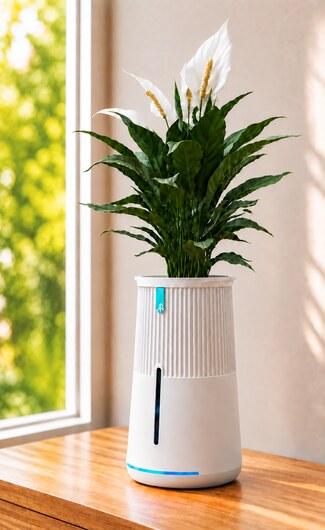
When we started building dharā, the problems we wanted to solve were the same ones that peak every rainy season: soggy soil, guesswork watering and roots that cannot breathe.
That is why dharā grows plants without soil.
The roots sit in a clean, soil-free substrate inside the OrbitBasket. Our patented OxyFlow™ technology works in a rhythm inspired by rivers: water rises to feed the roots, then recedes back into the reservoir, so roots get moisture and air in turns.
You can pick from 5 watering modes, from thirsty herbs to dry-loving succulents, and a low water alert tells you when to refill.
|
Monsoon concern |
Traditional pot with soil |
Plant1 dharā |
|
Wet soil for days |
Common, especially with poor drainage |
No soil to stay soggy |
|
Guesswork watering |
Depends on finger tests and memory |
Set a watering mode once |
|
Roots getting air |
Low when soil stays wet |
Water rises and recedes, giving roots air |
|
Fungus gnats in damp mix |
A frequent problem |
No wet potting mix for larvae |
|
Water spilling into saucers |
Runoff after every watering |
Closed loop reservoir, no runoff |
|
Plant feeding |
Separate fertiliser routine |
Amrit nutrients added to the NutriFuel slot |
A smart planter does not remove every task. Plants in dharā still need bright, indirect light and moving air. But it takes away the biggest cause of overwatering indoor plants, which is watering by guess.
For busy homes, first-time plant parents, and apartments with limited airflow, that makes indoor plant care in the rainy season far less stressful.
Your Monsoon Plant Care Checklist
Keep this list handy for easy monsoon indoor plant care through the season:
-
[ ] Check soil with your finger before every watering
-
[ ] Empty saucers within 30 minutes of watering
-
[ ] Run the fan on low for a few hours each day
-
[ ] Open windows on dry afternoons
-
[ ] Look for mould, gnats or mealybugs once a week
-
[ ] Move succulents and cacti to the brightest spot
-
[ ] Refill the dharā reservoir when the low water alert comes on
Before the Next Downpour
Tulsidas wrote in the Ramcharitmanas:
"कोउ न काहू सुख दुख कर दाता। निज कृत करम भोग सबु भ्राता॥" No one gives us joy or sorrow; we live the results of our own actions.
Your plants work the same way. The rain is not what decides how they look by the end of the season. Your small daily choices do: one skipped watering, one opened window, one emptied saucer.
Watch the humidity for indoor plants, keep the air moving, and let the soil tell you when to water. That is all monsoon indoor plant care really asks of you.
And if you would rather let a smart planter handle the watering rhythm, dharā was made for exactly that.
Give Your Plant a Rain-Ready Home →
FAQs
Question: Should I stop watering indoor plants during monsoon?
Answer: No. Plants still need water, just less often. Check the soil before each watering instead of following a fixed schedule.
Question: Why are my plant's leaves turning yellow in the monsoon?
Answer: In most cases, it is too much water and not enough light. Check if the soil is still wet from the last watering, and move the plant closer to a bright window.
Question: How do I get rid of fungus gnats in the rainy season?
Answer: Let the top two inches of soil dry out between waterings, since gnat larvae need wet soil to survive. Yellow sticky traps near the pot help catch the adult flies.
Question: Do indoor plants need fertilizer in monsoon?
Answer: Go light. Most plants grow slower in low light, so they need less feeding. A diluted dose once a month is enough for actively growing plants.
Question: How do I improve airflow without exposing plants to cold drafts?
Answer: Use a ceiling fan on low speed and keep plants a little away from windows that let in strong, cold wind. Gentle, steady air movement is what you are after.