Our team has a rule: every plant on the office shelf gets a name. Shelf four belonged to Basil, who arrived glossy and green and soon turned yellow and sulky. We watered more, then less, and fungus gnats moved in anyway.
One evening a teammate tipped the pot out and found cold, soggy mud around tea-coloured roots. We rinsed them, trimmed the brown bits, and set Basil in a clean substrate.
Ten days later, white roots appeared. That rescue made us fans of soil-free indoor plants, and this guide shares how to transfer an indoor plant from soil to soil-free setups.
हर बड़ी कहानी एक छोटे पौधे से शुरू होती है।
What Is Soil-Free Growing Media?
Think of soil as a crowded apartment where one room does everything. It holds the roots, stores water, and supplies nutrients. Soil-free growing media keep only the first job. A clean, lightweight substrate such as coco coir or perlite anchors the plant, while water and nutrients arrive separately from a reservoir.
That is the simplest answer to how to grow indoor plants without soil: the roots stay supported, but nothing stays soggy or hidden. If you want to understand the basics before making the switch, read our guide on how to grow indoor plants without soil.
In dharā, our OxyFlow™ rhythm lets water rise to the roots and then recede, so they get a drink and a breath of air. We borrowed the idea from rivers. जहाँ बहाव है, वहाँ जीवन है।
“Soil-free growing media are clean substrate, such as coco coir or perlite, that holds a plant upright without being its food and water supply. Water and nutrients come separately, usually from a reservoir. Roots get moisture and oxygen in a healthier balance.”
The Rise of Soil-Free Growing: A Market Snapshot
When we started, we assumed we were a little odd for growing plants without soil. The numbers say otherwise. Here is what one industry report found:
| Metric | What the Report Says |
|---|---|
| Market size, 2025 | USD 3.64 billion |
| Forecast, 2034 | USD 7.90 billion |
| Growth rate (CAGR, 2026-2034) | 8.99% |
| Main growth drivers | Wider soilless farming, urban farming, water savings |
| Common substrates | Coco coir, perlite, rockwool |
| Segments tracked | Includes herbs, flowers and residential use |
| Source | Value Market Research: Global Hydroponic Substrate Market Report 2026-2034 |
The figures come mostly from commercial growers, but herbs and residential use appear in the segment list, so this is no longer only a farm story. Our team sees the same shift in homes, where small spaces and busy schedules make clean growing attractive. That is why transplanting plants to hydroponics is now something you can try on a kitchen counter.

Why Switch? Benefits and Honest Limitations
We believe in being honest, because soil-free growing is not magic. Here is how the two approaches compare:
| Factor | Traditional Soil | Soil-Free Setup |
|---|---|---|
| Mess | Spills and muddy hands | Clean handling |
| Watering | Guesswork, easy to overwater | Reservoir with measured cycles |
| Pests | Damp soil attracts gnats | Fewer soil-borne pests |
| Root visibility | Hidden | Easy to check |
| Adjustment | None | A few weeks |
The upside is a cleaner, calmer routine. The catch is a short adjustment period and a new feeding habit, since there is no soil to supply nutrients.
Which Indoor Plants Transition Well (and Which Don't)
After Basil, our next experiments were a pothos cutting and some mint. Both settled in happily, because their roots were already comfortable around water. A spider plant took longer, and we trimmed its long roots first. Succulents and cacti were the fussiest, since they prefer a drier rhythm.
In our experience, herbs and leafy trailing plants are the easiest plants that grow without soil. Large woody plants need more patience.
Browse our Plant Directory to match your plant with the right watering mode.
Looking back, the timing made it worse. It was the rainy season, when soil stays wet for days and still air gives gnats the perfect place to breed. We later put together a full guide on monsoon indoor plant care after seeing how many plants struggle the same way.
“Herbs like basil and mint, and trailing plants like pothos, adapt fastest. Spider plants need a root trim, while succulents, cacti, and large woody plants need a slower approach. Check the Plant Directory before you start.”
What You'll Need Before You Start
Roots should never dry out halfway through, so our team lays everything on a tray first:
- A healthy plant (skip any that are badly struggling)
- Clean, room-temperature water
- A soil-free substrate
- A container or soil-free planter
- Plant nutrients
- Clean scissors and a wide bowl
Step-by-Step: Transferring Your Plant from Soil to Soil-Free Growing Media
It took a few messy tries before we got this right. Follow these steps in order.
Step 1: Water lightly the day before: Do this so the soil loosens and the root ball slides out easily.
Step 2: Set up your station: Spread newspaper, fill a bowl with lukewarm water, and keep scissors and substrate within reach.
Step 3: Take the plant out: Tilt the pot, hold the base of the plant, and slide it out gently. Never pull the stem.
Step 4: Soak the roots: For how to remove soil from plant roots, place the root ball in the bowl for five minutes and let the water loosen the soil.
Step 5: Rinse under running water: Hold the roots under a gentle stream and rub away what remains. Keep going until the water runs clear.
Step 6: Trim damaged roots: Cut off anything brown, black or mushy. Keep the firm, pale roots.
Step 7: Secure in the substrate: Set the roots in the substrate with the crown above it, then fill around them so the plant stands firmly.
Step 8: Add water and nutrients: Fill the water, add nutrients at the recommended dose, and place the plant in bright, indirect light.
“Soak and rinse every trace of soil off the roots, trim the damaged ones, and secure the plant in a clean substrate. Then add water and nutrients at the recommended dose and set it in bright, indirect light. Gentle handling at each step reduces stress.”
How We Do It with dharā
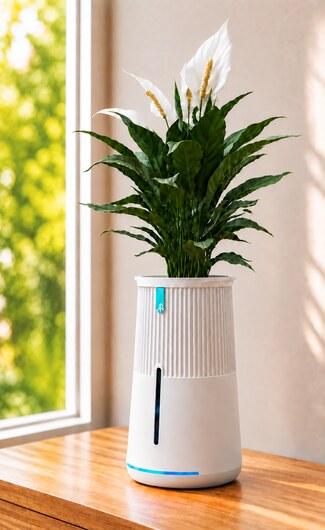
Our team built dharā so this feels like a routine, not a science project. Our soil-free planter works in five steps:
- Fill the reservoir with clean water up to the max indicator.
- Soak and rinse the roots under running water.
- Secure the roots in the OrbitBasket with substrate and slide it in.
- Add 10-15 pipettes of Āmrit plant nutrients into the NutriFuel slot.
- Connect the USB Type-C adapter and choose one of five watering modes.
The built-in reservoir can keep plants hydrated for up to 30 days, depending on the plant and room conditions. We believe a good planter should give you time back, not another chore. See dharā for details.
“With dharā you fill the reservoir, rinse the roots, secure them in the OrbitBasket with substrate, add Āmrit nutrients and pick one of five watering modes. The reservoir can hydrate plants for up to 30 days.”

Aftercare: The First 2-4 Weeks
In week one, keep the plant in bright, indirect light, away from harsh sun. A little drooping is normal, because transplant shock in indoor plants is common and usually fades once new roots form.
In weeks two and three, look for fresh white roots and stick to the nutrient dose.
By week four, most plants look steady, and care becomes simple refills.
Our team learned this the slow way. Every time we rushed or over-fed, the plant let us know, and patience turned out to be the real secret of transplanting plants to hydroponics. सब्र रखिए, हर पौधे को थोड़ा वक़्त चाहिए।
If you're unsure what bright, indirect light actually means, our guide explains how to find the right spot for your indoor plants.
Troubleshooting: Transplant Shock, Yellow Leaves, Root Rot
Our team has made every one of these mistakes, so here is a quick map:
| Problem | Likely Cause | What Helped Us |
|---|---|---|
| Drooping leaves | Transplant shock in indoor plants | Indirect light, steady water, patience |
| Yellow leaves | Too much nutrient or low light | Reduce the dose, move to a brighter spot |
| Brown, mushy roots | Rot or leftover soil | Trim and rinse again |
| Cloudy, smelly water | Stale reservoir | Clean and refill |
If rot appears, go back to how to remove soil from plant roots in Step 5 and rinse again. Leftover soil can trap moisture, so a second rinse often helps.
If you are unsure whether your plant is getting too much or too little water, our guide to overwatering vs underwatering can help you spot the difference and adjust your watering routine.
“Most problems come from transplant shock, too much nutrient or stale water. Trim rotted roots, lower the dose if leaves yellow, and keep the reservoir clean. A second rinse often fixes leftover-soil problems.”
Real Grower Results
Mohit and Sapna told us their basil became the little centrepiece of their home, with no soil involved. Achintya shared that indoor gardening finally felt cleaner and easier around a busy schedule.
Their stories are why we believe soil-free indoor plants suit modern lives. Read more from our Smart Growers.
Conclusion
Basil is still on shelf four, and it is the leafiest thing in the room. It taught our team what we still believe: moving from soil to soil-free growing media is less about technique and more about gentleness. If you remember how to transfer an indoor plant from soil to soil-free, remember this: rinse well, trim kindly, feed lightly, and wait.
If you want a head start, our soil-free planter is built for exactly this. Explore dharā or reach us through our support centre.
FAQs
Question: Can any plant grow without soil?
Answer: Not every plant, but many do well. Herbs, pothos, and leafy houseplants are easy plants that grow without soil. Succulents and large woody plants need more care, so start simple.
Question: How long does adjustment take?
Answer: Usually a couple of weeks. You will often see mild drooping first, then fresh white roots. Keep the light indirect and the nutrients consistent.
Question: Do I need fertiliser?
Answer: Yes. There is no soil to supply nutrients, so nutrient water does that job. Follow the recommended dose, because too much can yellow the leaves.
Question: How often do I refill the water?
Answer: It depends on the plant, temperature, light, and growth stage. A water indicator tells you when it is low, so you do not need to check daily.